
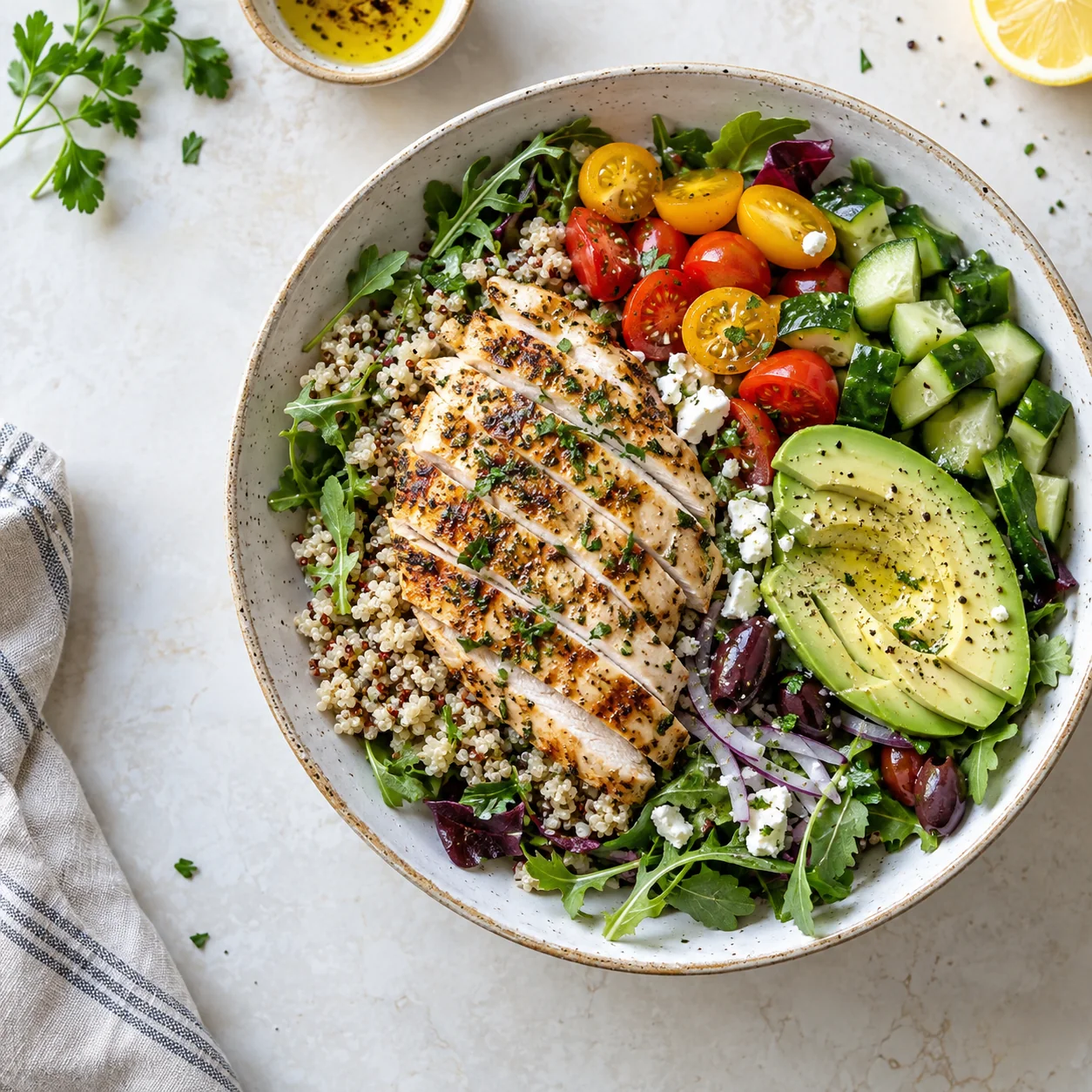
Give a meal a useful starting structure
Combine vegetables or fruit, a starchy food such as rice or whole grains, and a protein food such as beans, lentils, fish, eggs, or chicken. Include appropriate dairy or a suitable fortified alternative if it fits your needs. Portions vary with age, activity, appetite, and health; one diagram cannot prescribe a diet for everyone.
A rice-and-lentil meal with cooked vegetables, or a sandwich with a protein filling and a side of fruit, can follow the same flexible idea as a carefully arranged grain bowl.
Sources: WHO — Healthy diet
Use variety instead of a superfood list
WHO guidance emphasizes vegetables, fruit, pulses, nuts, and whole grains while limiting excess salt, free sugars, and unhealthy fats. Different foods contribute different nutrients. Frozen vegetables and rinsed canned beans can make variety easier when fresh choices are costly or time is short.
“Natural” is not a reliable nutrition rating. Honey and syrups still contribute free sugars, and a product can be expensive or heavily promoted without offering something you need.
Sources: WHO — Nutrition for a healthy life
Make the next shop easier
- Choose two or three meals that share ingredients so less food goes unused.
- Check what is already in your fridge or cupboard before making a list.
- Compare unit prices where available, while buying only quantities you can store safely.
- Keep one quick option available for busy evenings, such as cooked beans with vegetables and a grain.
If a meal plan is repeatedly too demanding, simplify it. Convenience and balanced eating can coexist.
Read labels for the decision you are making
Compare similar foods using the same quantity, such as per 100 g, where that information is available. Look at salt or sodium, added sugars where listed, and saturated fat rather than judging the package by a single marketing claim.
Check ingredients and allergen statements every time if you have a food allergy. A recipe substitution does not make a product safe if it was made with or contaminated by an allergen.
Sources: NHS — Food allergy
Know when general advice is not enough
Pregnancy, childhood, kidney disease, diabetes treatment, food allergies, and eating disorders can change nutrition needs. Seek advice from a qualified clinician or dietitian before major restrictions or supplements. Ongoing trouble swallowing, unexplained weight loss, or inability to eat enough needs medical assessment.
For a practical meal idea, try our chicken and quinoa bowl. It includes ingredient quantities, alternatives, and safe cooking guidance.
Sources: NIH — Dietary supplements
Common questions
Do I need to remove all carbohydrates?
No. Whole grains, pulses, fruit, and many vegetables contain carbohydrates and can fit a varied eating pattern. If you need blood glucose management, get advice tailored to your treatment.
Are supplements a substitute for meals?
No. Some people need specific supplements, but they do not replace a varied diet. Ask a healthcare professional about your needs and possible medicine interactions.
Sources & further reading
Public sources consulted for this update. Guidance can differ by country and personal circumstances.
HealthBook provides general health information for educational purposes and is not a substitute for professional medical advice, diagnosis, or treatment.